

Featured Essays


Key Themes
History of Intelligence
AI sets in motion a new chapter in the history of intelligence’s confrontation with fate and necessity. Telling the stories of its twists and turns will broaden our upstanding of what intelligence has been and can be.
Computational Power
These essays examine how digital systems reshape experience, agency, and the unfolding of time. This is not a moral complaint; it is an examination of possibilities.
Rejuvenation
Modernity is not defined by the loss of meaning, but by the expansion of human self-assertion—the long effort of our genus to shape contingency, redirect fate, and assume responsibility for outcomes once attributed to nature or the gods.

Finding God in All Things
Written during a Jesuit retreat in Colorado, this essay reflects on spiritual direction, Ignatius’ call to find God in all things, and the Sermon on the Mount as a release of the spirit of the law from rigid codes. The Sermon becomes a meditation on excess, contingency, forgiveness, and the difficult work of orienting free energy toward the good.
What Is Religion?
At some point, anyone who seriously reflects on their place in the world encounters a deeper question than what to do next. The question is whether we are being called—called to attend to something that exceeds us and yet moves through us. This essay explores religion not as belief or law, but as a cultivated openness to purpose arriving from beyond the self. It argues that discernment, not certainty, is what keeps purpose from hardening into dogma, and that metanoia names an orientation to the future that remains alive to what has not yet taken shape.
Energy and Epiphany in the Later Works of Michel Serres
A brief reflection on Michel Serres’ understanding of our ongoing power to expand our understanding and harnessing of energy to overcome fate and destiny. He re-reads the experience of religion in this context.

Bataille, Religion, Experience
What is to become of religion in our time? In this essay, I descend into Bataille’s speculations on the contingent birth of consciousness out of the ‘water in water’ of pure experience.

Ressentiment Unbound
Nietzsche treated ressentiment as a consolation for a desire for vengeance that is too weak to act. But what happens when it finds itself in power? In this essay, I explore the consequences of empowered ressentiment on the woke left.

His Name is John
A reading of Luke’s account of the naming of John the Baptist.

Metanoia and the Experience of Time: Beyond Repentance and the Practice of Change in Mark’s Gospel
This brief essay revisits metanoia in Mark’s Gospel as a radical change in our experience of time. This poetic reflection reframes one of Jesus’ first words — often mistranslated as ‘repent’ — as an invitation to loosen expectation and inhabit a time of possibilities.
Reading Zarathustra: Prologue
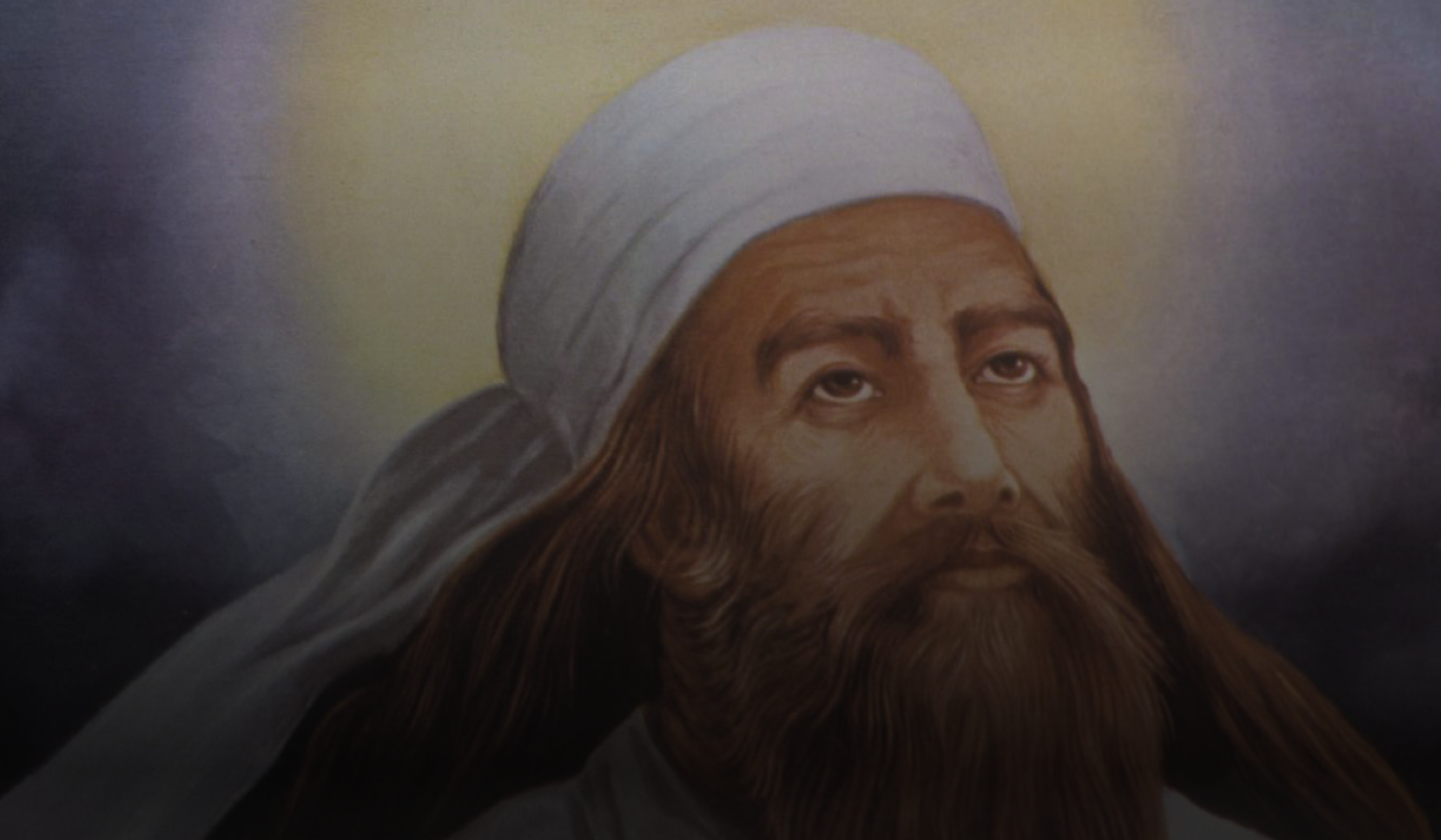
The first in a commentary series on Thus Spoke Zarathustra. This post covers Zarathustra’s Prologue.

The Radical Philosophy of Saint Paul - Stanislas Breton
Breton set in motion the philosophical and theological reconsideration of Paul (which was already underway in more scholarly investigations into ‘the historical Paul’). This book is crucial to the reconsideration of Paul that found in his letters the power to suspend the weight of culture to find ‘new horizons’ of salvational experience.

Mark 3:31-35: Who Is, Here Is
This essay reads Mark 3:31–35 as a decisive reconfiguration of belonging. Kinship is no longer anchored in blood, tradition, or continuity, but in presence and action—who is here, and what is done. Time is no longer something one inherits; it is something one inhabits. Ethical identity emerges not from origin, but from participation in a living moment.

Paul in Athens
The Things of God and the Things of Humanity
This essay examines the tension between divine and human action not as a metaphysical divide, but as a practical distinction that shapes how time is lived. Rather than separating sacred from secular, it asks how responsibility is distributed across moments of decision. The question is not what belongs to God and what belongs to humanity in principle, but how action unfolds under conditions of finite agency,

Kairos and Continuity
This essay takes up the ancient distinction between chronos and kairos to explore how time can be lived as more than succession. Kairos names the charged moment—the opening in which action matters disproportionately to duration. Read alongside continuity, kairos becomes not a rupture from time, but a way of inhabiting it attentively, without surrendering to either stasis or acceleration.

Mercy without Recognition
Mercy is often framed as an extension of recognition: seeing oneself in the other. This essay pushes in the opposite direction. It explores mercy as an act that does not rely on identification or reciprocity, but on attentiveness to the moment at hand. Mercy here is not sentiment but temporal discipline—an ethical response that resists calculation, delay, and justification.

Luke 9:57-62: Roads, Renunciation and Following

Enlightenment, Negation, Re-Reading

Jesus and Pilate - Giorgio Agamben
The trial of Jesus was not a trial but a “handing over” as a form of giving up in the face of the “crossing of the temporal and the eternal that assumed the form of a trial.”

Antirrhetikos - Evagrius
David Brakke’s Introduction to his translation of this key work by Evagrius of Pontus is well worth the read. In Evagrius I have found no one who more intensely thought about time as practice.

The Nature of Sin

Time Untethered from Motion
The first in a series of meditations coming to terms with Hans Blumenberg’s The Genesis of the Copernican World. This is an important work for anyone interested in time as practice.