

Featured Essays


Key Themes
History of Intelligence
AI sets in motion a new chapter in the history of intelligence’s confrontation with fate and necessity. Telling the stories of its twists and turns will broaden our upstanding of what intelligence has been and can be.
Computational Power
These essays examine how digital systems reshape experience, agency, and the unfolding of time. This is not a moral complaint; it is an examination of possibilities.
Rejuvenation
Modernity is not defined by the loss of meaning, but by the expansion of human self-assertion—the long effort of our genus to shape contingency, redirect fate, and assume responsibility for outcomes once attributed to nature or the gods.

Practice: Repentance or Metanoia?
Metanoia is not repentance by another name. It is an orientation to time that delays meaning, resists judgment, and learns by moving forward. Drawing on Mark’s Gospel, this practice explores how patience, listening, and restraint can open a different experience of the future—one not governed by ressentiment or premature certainty.

His Name is John
A reading of Luke’s account of the naming of John the Baptist.

Mark 3:31-35: Who Is, Here Is
This essay reads Mark 3:31–35 as a decisive reconfiguration of belonging. Kinship is no longer anchored in blood, tradition, or continuity, but in presence and action—who is here, and what is done. Time is no longer something one inherits; it is something one inhabits. Ethical identity emerges not from origin, but from participation in a living moment.
The Things of God and the Things of Humanity
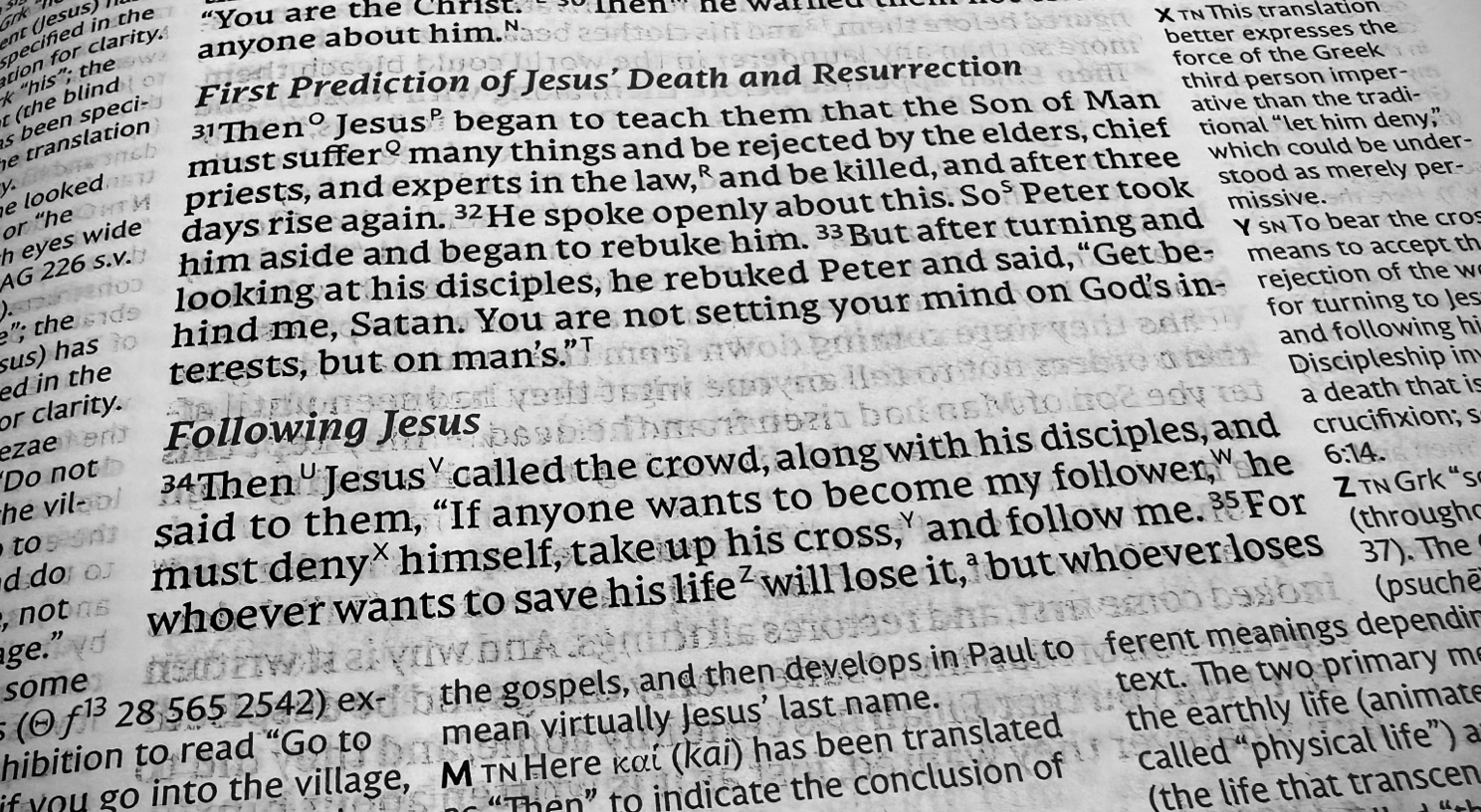
This essay examines the tension between divine and human action not as a metaphysical divide, but as a practical distinction that shapes how time is lived. Rather than separating sacred from secular, it asks how responsibility is distributed across moments of decision. The question is not what belongs to God and what belongs to humanity in principle, but how action unfolds under conditions of finite agency,

Kairos and Continuity
This essay takes up the ancient distinction between chronos and kairos to explore how time can be lived as more than succession. Kairos names the charged moment—the opening in which action matters disproportionately to duration. Read alongside continuity, kairos becomes not a rupture from time, but a way of inhabiting it attentively, without surrendering to either stasis or acceleration.

Mercy without Recognition
Mercy is often framed as an extension of recognition: seeing oneself in the other. This essay pushes in the opposite direction. It explores mercy as an act that does not rely on identification or reciprocity, but on attentiveness to the moment at hand. Mercy here is not sentiment but temporal discipline—an ethical response that resists calculation, delay, and justification.