

Practice: Deep Dives
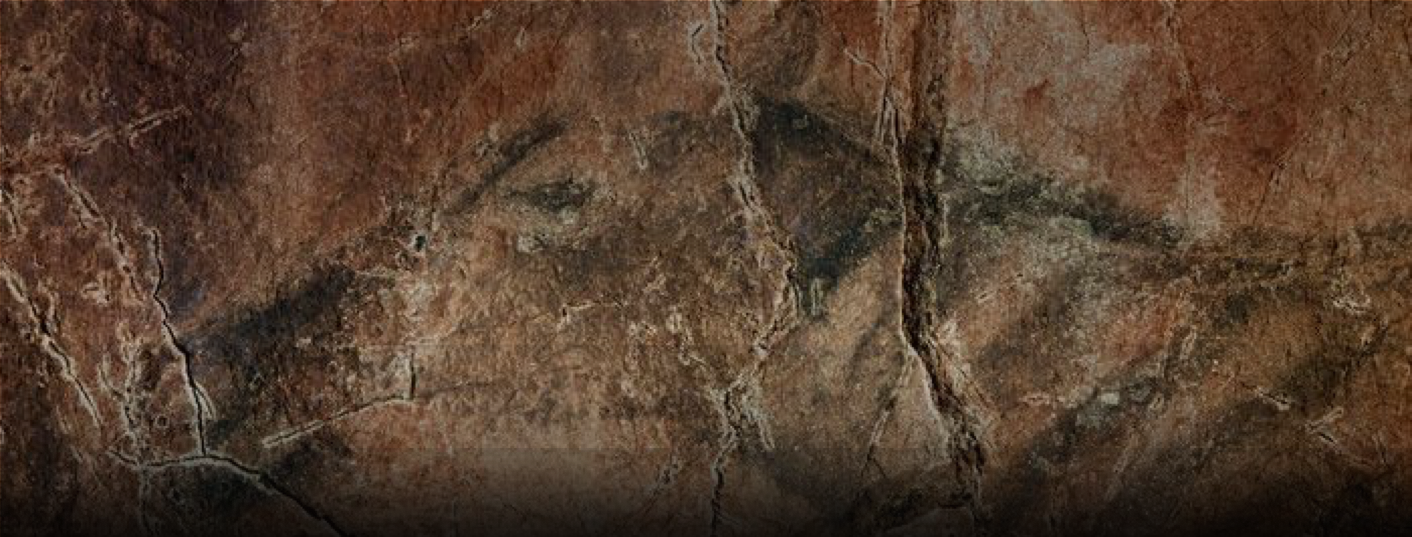
Red deer from the cave paintings of Tito Bustillo
Taking a deep dive into topics or thinkers who can stretch your experience in new directions is a vital practice for our time out of joint. As someone trained in English Literature and well-read in philosophy, I’ve become interested in theoretical physicists who are pushing the boundaries of what life is and the kind of creatures that we are in the universe.
Thinkers like Lee Smolin, Carlo Rovelli, Sara Walker, Stephen Wolfram, David Deutsch, Chiara Marletto and others like them for me have been worth the deep dive. I don’t mean just reading their books and checking them off my reading list. As I struggle to understand their ways of seeing the world, my own experience expands and I see the world differently, too.
This only happens, however, if you read to broaden your experience, which means trying make the ideas your own. Stuggling to understand Walker’s explanations of Assembly Theory or Deutsch and Marletto on Constructor Theory or Wolfram’s Computational Irreducibility will stretch not just your mind by your capacity for experience in the universe.
I guarantee that you will lose a lot of your precious certainties as you seek to deeply understand their ideas. This doesn’t mean simply reading their books, but you can listen to interviews with them—they’re all over YouTube.
Deeply understanding something new will also challenge your ways of learning, and it will draw you into our computational world more deeply as you learn to use the tools of our time for your own ends. You may, like I have, found that I need to write my own experience of their thoughts so as to make sense of them for myself. You may then find that writing and journaling about these ideas will broaden your experience of yourself and your place in the universe.
Examples from My Experience
Here are some examples of deep dives that I’ve taken recently that have changed my capacity for experience:
Visited the cave paintings of Tito Bustillo and took a deep dive into the scholarship. It made me realize how deeply entangled our modern experience is with Cartesian explanations, but also shed new light on how rapidly Homo sapiens consciousness has changed. I’ve written about it in The Cave Paintings of Tito Bustillo
Read, re-read and wrote about how the Enlightenment broke the Christian stranglehold on time by convincing us that the Earth was more than 6000 years old. A deep understanding of that change has given me an appreciation of how young our consciousness of time actually is. Homo sapiens does not emerge with an automatic understanding of time—it has to be constructed. My essays Fate, Computation and the End of Christian Time and The Discovery of Time are results of this deep dive.
I’ve spent time really trying to understand Babylonian astronomy and its use of computational power to confront fate and the gods. It has been an extraordinary journey into a period of history that is a gap for me. I’ve written about it in Out-Computing the Gods.
See more Practices of Time