

Out-Computing the Gods
Ancient Babylonian Astronomy and the Power of Computation
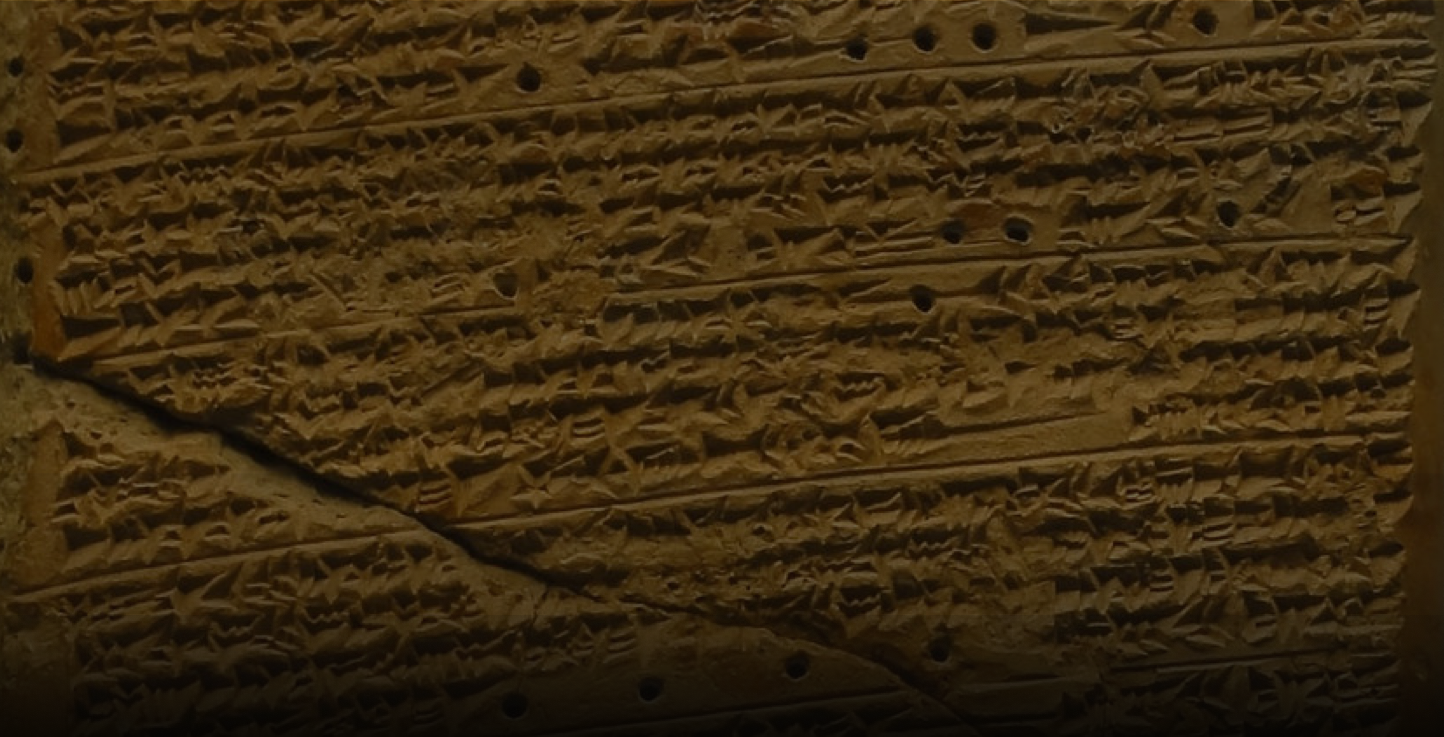
Cuneiform tablet from ancient Mesopotamia defining the omens of Venus. British Museum.
Summary: The argument of this essay is simple: when humans discover computational power, they gain enormous control over time and fate because it allows us to assert purpose at unprecedented speed and scale. In recent Substack essays, I’ve argued that the Enlightenment marked a rapid acceleration of this power. In this brief essay, I track back to an earlier acceleration—the astronomical calculations of ancient Mesopotamia.
What we find is a new birth of human purpose—the ability to envision the future and select actions calculated to make it happen. In ancient Mesopotamia, it took the form of computing the future faster than the gods could bring it about.
Definition of computational power: It is the ability to understand the processes and rules by which nature operates and to use that power to shape the future. It is, necessarily, bound up with the capacity to assert purpose and intent.
We need not assume this power is exclusively human, but we can see that one of the evolutionary outcomes of humanity is the unprecedented capacity for this power to manifest itself.
Faster than the Gods
When the Babylonians of the second and first millennia BCE looked to the heavens, they saw gods sending omens—signs of what was about to happen to humans. Eclipses, planetary movements, and other celestial phenomena were the signals, which astronomers recorded meticulously, not to explain them, but so that when they occurred again, they could prepare accordingly.
One example among thousands: an eclipse could signal the imminent death of a king, so a substitute king is installed to absorb the danger until it passed. Predicting eclipses well ahead of time became a means of outsmarting the gods and changing the future they had ordained.
As Moudhy Al-Rashid observes, given that an eclipse could mean death for a king, predicting eclipses became a priority. Babylonian scholars moved from repeated observation to identifying long-period regularities, including the roughly eighteen-year eclipse cycle (the Saros cycle), and eventually to numerical schemes capable of projecting eclipses in advance. [1]
Divination became prediction.
This transition becomes explicit in the Goal-Year texts and the Astronomical Diaries. Celestial events are projected forward from earlier cycles, but their predicted effects are recorded alongside them: rising grain prices, falling river levels, shortages, unrest. An eclipse is no longer only a sign for the king; it is part of a temporal chain that reaches into markets and crops. The future is generated by re-running the past, not only in the sky but in the conditions of everyday life.
This is a watershed in the history of Homo sapiens. Recording events is one thing; specifying when they will occur—and what is likely to follow—is another. Prophecy can always claim that something will happen. Computation names the day and can be fine tuned as the events eternally recur.
The Babylonians were not seeking natural laws. They timed and recorded what they could see—the first and last visibility of Venus, the onset of eclipses, the length of lunar months—and accumulated those observations across generations. From the resulting patterns they derived practical rules, copying forward earlier cycles with small corrections to project events years in advance.
The world begins to appear as moving with calculable regularity. More importantly, prediction enables preparation, and preparation enables intervention. The gods do not disappear, but they lose their monopoly on the future. If an eclipse foretells the king’s death, and computation allows that danger to be displaced onto a substitute—and scarcity to be anticipated before it arrives—then fate becomes negotiable.
Put plainly and quite literally: the Babylonian’s investment in computational power allowed Homo sapiens to move faster than the gods, extending foresight from the heavens into harvests, prices, and survival itself. [2]
Out-Computing Fate
Homo sapiens have been using computational power to gain the upper hand over fate ever since. As Stephen Toulmin and June Goodfield have written of Babylonian astronomy:
Fate was degreed by the Gods. But the paths of the Gods formed a pattern in the sky which the intellect could master; and to read omens—whether astronomical ones or others—was one way of figuring out the pattern of Fate. Against this background, the arts of divination and astrology were not a quaint kind of delusion, but rather a genuine challenge to human ingenuity. [3]
That challenge only makes sense in a cosmos moving with regularity. In the Babylonian creation epic, Enuma Elish, Marduk defeats chaos by fixing the motions of the heavens—assigning the stars their paths and the moon its cycle. Fate remains divine, but it now unfolds within a regular, repeatable order. The sky becomes reliable because the gods have made it so.
This pattern will recur. In the Enlightenment, the Christian God increasingly gives way to the God of the Deists: no longer an active intervener, but the guarantor of an orderly universe whose regularity can be trusted. The metaphysics change; the wager does not: God remains an orderly creator, but humanity takes over the task of its own redemption. We’ve already traced how computational power was crucial to this redemption.
Regularity gives ingenuity a foundation on which to work. What begins as omen interpretation slowly becomes prediction; what begins as ritual response becomes procedural intervention.
By the time Babylonian scholars are using Astronomical Diaries and Goal-Year texts to project eclipses, price shifts, and shortages in advance, fate has changed character. It is no longer a verdict delivered without warning. It is a process that can be anticipated, delayed, displaced, or mitigated—if one can move fast enough.
This is our Babylonian legacy: the faster we can compute, the more influence we have over the future.
Over centuries, the indirect control Babylonian astronomers sought over fate has hardened into the more direct forms of control we now exercise across markets, infrastructures, and technologies. Fate has not disappeared—but it increasingly yields to those who can run the world’s processes faster than they unfold.
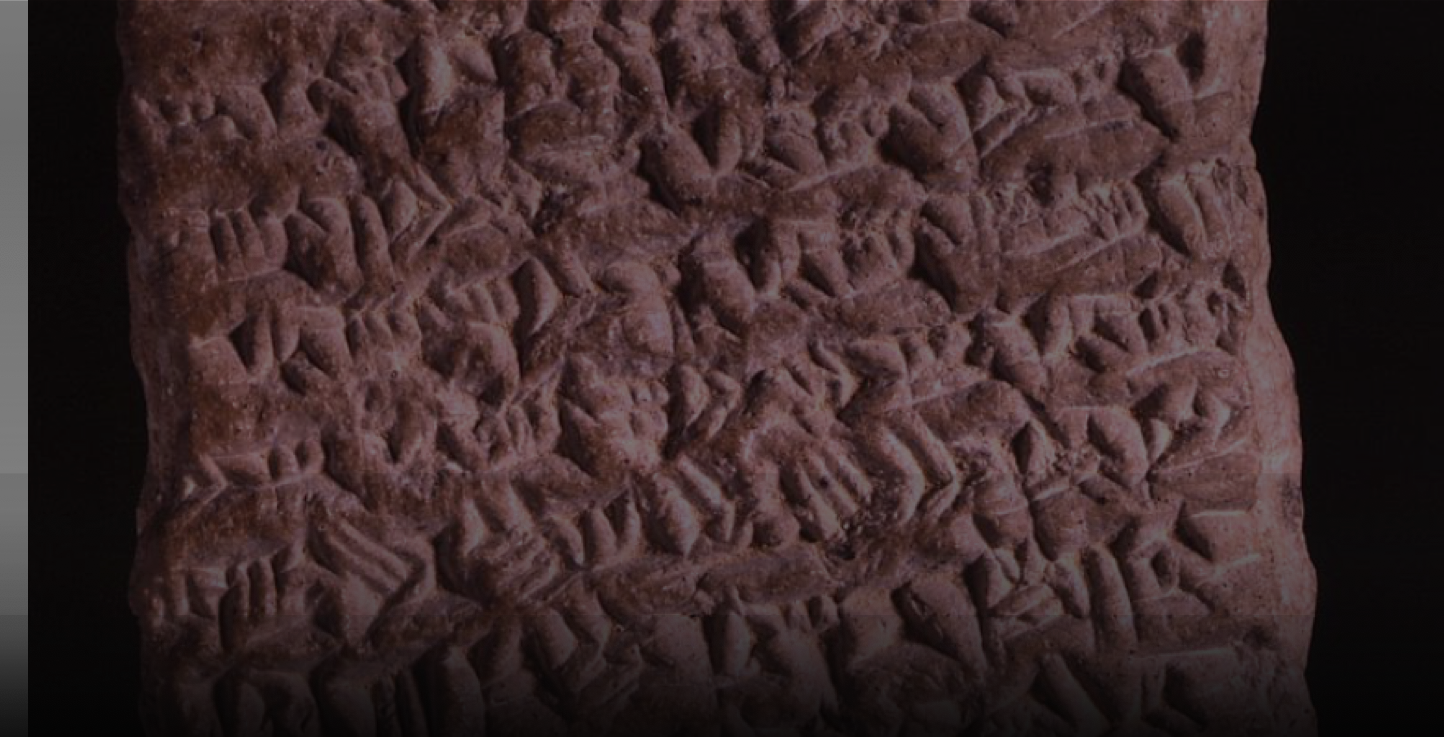
Fragment of the Astronomical Diaries recording the death of Alexander the Great in 323 BCE. Edited from the source at the British Museum.
When the Future Becomes Computable
Can we draw a straight line from ancient Babylon to the present? Of course not. History does not advance with smooth linearity; it meanders, doubles back, forgets, and redistributes its insights unevenly across time.
Whatever coherence it has we impose retrospectively—by telling stories.
The cuneiform record of Babylonian astronomy disappeared—buried and unreadable as a textual tradition until its excavation and decipherment in the mid-nineteenth century—but the insight it embodies did not vanish with the tablets. What endured, meandering through history in other forms, was the discovery that regularity can be exploited: that time can be run forward, nature’s processes anticipated, and fate met with foresight rather than submission. The scholarly recovery of Mesopotamian astronomy allows us to glimpse an early moment when Homo sapiens begins to find computational shortcuts through the world—when calculation, still tentative and embedded in ritual and myth, first loosens the grip of fate.
This does not happen without divination. Reading the heavens as signs from the gods stabilized the sky just enough for regularity to become visible. Once regularity is secured, foresight becomes possible; once foresight becomes reliable, human purposes can begin to press against inherited necessity. This sequence—order, anticipation, intervention—will recur again and again.
Computation, in this sense, is not merely a tool for prediction. It is a way of putting distance between humanity and the gods—by rendering their world orderly—and of assuming responsibility for the direction of history. To calculate the world’s processes faster than they unfold is to discover that purpose, intention, and choice can enter history as active forces rather than passive hopes or Stoic endurance.
Artificial Intelligence is not new. The foundation of its power is very old, but it computes faster than any tool we have ever created. Speed, spread, and acceleration is its newness.
For more on purpose, see ‘Finding Purpose in a Computational World’.
Footnotes
1 Moudhy Al-Rashid, Between Two Rivers: Ancient Mesopotamia and the Birth of History, Norton, 2025, 159.
2 Fans of Stephen Wolfram may recognize this as an episode in the Computationally Bounded Observer finding a pocket of Computational Reducibility in a universe that is fundamentally Computationally Irreducible. We will need to take up this framework in future essays. For an excellent discussion of how how these concepts inform a new understanding of ‘purpose’ see his recent post ‘What’s So Special about Life?’
3 Stephen Toulmin and June Goodfield, The Fabric of the Heavens: The Development of Astronomy and Dynamics (1961, University of Chicago Press) p. 44.