

Featured Essays




Dava Sobel - Longitude
Understanding Harrison's clocks is essential to understanding how we got from the Middle Ages to the Enlightenment and our own Modern age. The story of John Harrison's attempts to solve the Longitude Problem is a story about the changing historical consciousness of time.

Heidegger - Being and Time
With deference to Bergson, Heidegger's Being and Time is the lasting work with respect to philosophical thinking about time.

Time Reborn - Lee Smolin
Lee Smolin argues that physics should no longer treats time as an experiential illusion. It is fundamental to the universe because everything is relational and evolving.
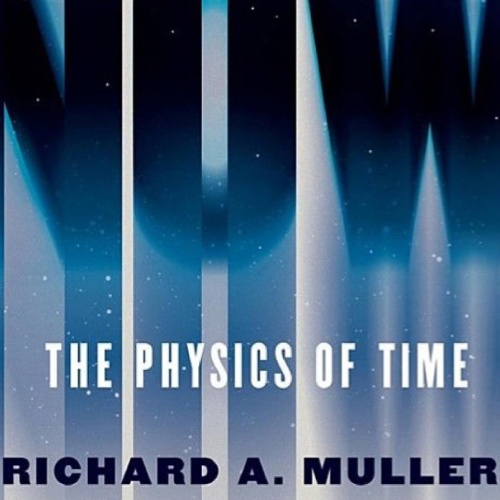
NOW: The Physics of Time - Richard A. Muller
Richard Muller argues that if space is expanding (the Hubble Expansion), then time must also be expanding. The universe lives on a "leading edge of time" that is the continuously rolling now.

Carlo Rovelli - The Order of Time
A largely speculative work by one of the more famous theorists of Loop Quantum Gravity. Time is not fundamental for Rovelli, it is emergent.
Time Out of Joint
How do we compose time?

Time and Theodicy
Religion and philosophy emerge when we descend into our experience of time

At the Edge of le Grand Récit
An essay exploring Michel Serres’s engagement with Le Grand Récit and what narrative uncertainty means for ethical life in a world of multiplicity and contingent connection.
L’Incandescent – Serres on Emergence, Light, and Moral Attention
An essay exploring Michel Serres’s concept of the incandescent — where light, unpredictability, and moral attention emerge at thresholds beyond calculation and control.

Galileo’s Pulse

Mark 3:31-35: Who Is, Here Is
This essay reads Mark 3:31–35 as a decisive reconfiguration of belonging. Kinship is no longer anchored in blood, tradition, or continuity, but in presence and action—who is here, and what is done. Time is no longer something one inherits; it is something one inhabits. Ethical identity emerges not from origin, but from participation in a living moment.

Aphorisms on the in-Between Part I

Paul in Athens
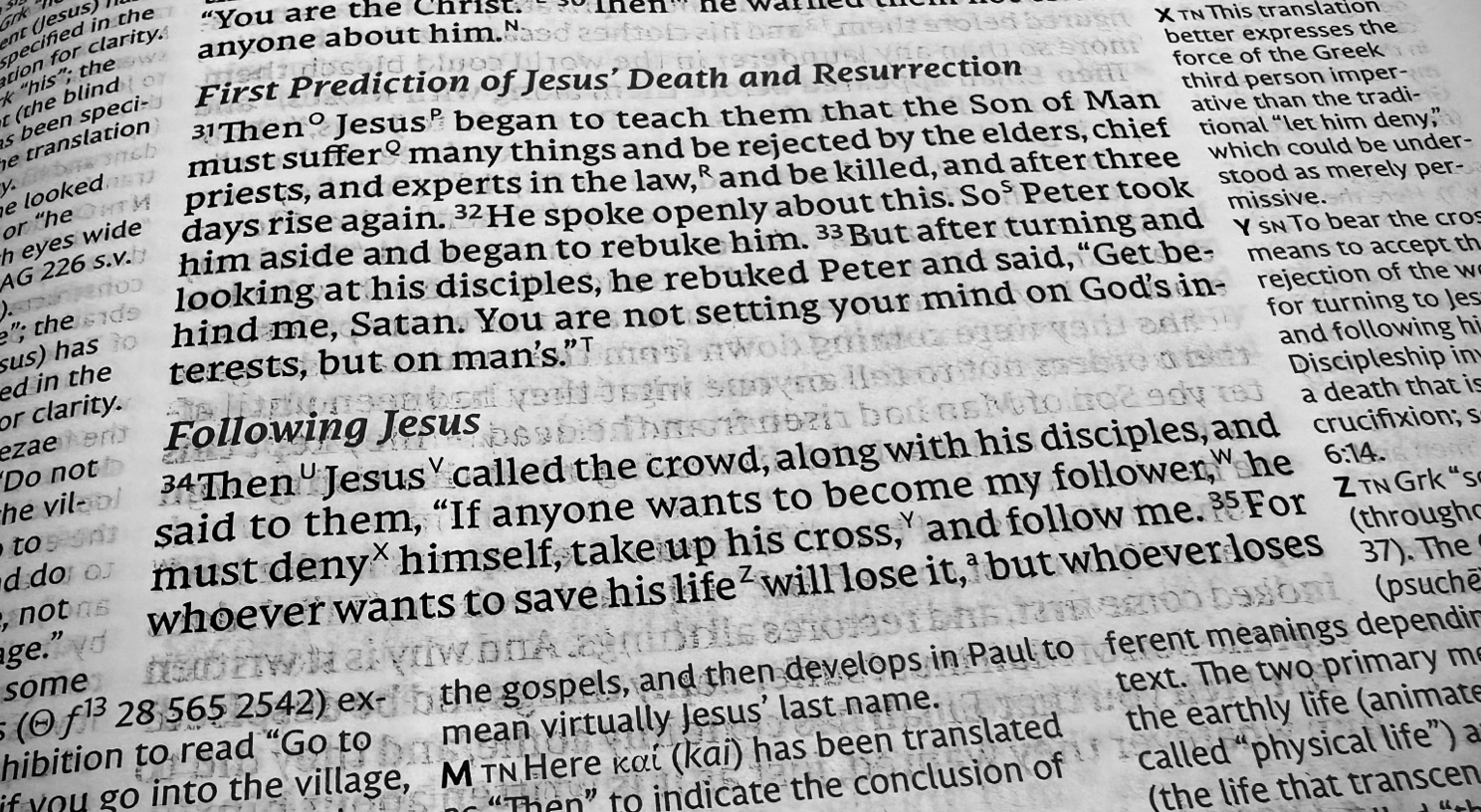
The Things of God and the Things of Humanity
This essay examines the tension between divine and human action not as a metaphysical divide, but as a practical distinction that shapes how time is lived. Rather than separating sacred from secular, it asks how responsibility is distributed across moments of decision. The question is not what belongs to God and what belongs to humanity in principle, but how action unfolds under conditions of finite agency,

Kairos and Continuity
This essay takes up the ancient distinction between chronos and kairos to explore how time can be lived as more than succession. Kairos names the charged moment—the opening in which action matters disproportionately to duration. Read alongside continuity, kairos becomes not a rupture from time, but a way of inhabiting it attentively, without surrendering to either stasis or acceleration.

Zarathustra’s Middle Path

Birth of Physics - Michel Serres
Michel Serres makes Lucretius our contemporary. Published just before Le Parasite, Le Naissance de la physique was a key moment in the history of chaos theory and the ability to see order emerging from disorder -- a reversal of the Enlightenment's formula. Serres finds in Lucretius' De rerum natura a pre-Modern text that offers a more relevant way of thinking about order and disorder free of eternal natural laws.

Civitas Peregrina and Affirmation

Mercy without Recognition
Mercy is often framed as an extension of recognition: seeing oneself in the other. This essay pushes in the opposite direction. It explores mercy as an act that does not rely on identification or reciprocity, but on attentiveness to the moment at hand. Mercy here is not sentiment but temporal discipline—an ethical response that resists calculation, delay, and justification.

Luke 9:57-62: Roads, Renunciation and Following
Follow these essays
You can follow by email, RSS, or in Feedly.