

Featured Essays

Key Themes
History of Intelligence
AI sets in motion a new chapter in the history of intelligence’s confrontation with fate and necessity. Telling the stories of its twists and turns will broaden our upstanding of what intelligence has been and can be.
Computational Power
These essays examine how digital systems reshape experience, agency, and the unfolding of time. This is not a moral complaint; it is an examination of possibilities.
Rejuvenation
Modernity is not defined by the loss of meaning, but by the expansion of human self-assertion—the long effort of our genus to shape contingency, redirect fate, and assume responsibility for outcomes once attributed to nature or the gods.
What does it mean to call our era ‘unintelligent’?
The paradox is that AI enters history promising an expansion of intelligence just as our collective ability to imagine a future beyond the present seems to be collapsing. We have become extraordinarily capable of optimization, but increasingly uncertain about what we are optimizing toward.Intelligence, I suggest, is not merely the ability to produce better outcomes. It is the ability to transform what appears to be fate into possibility.

Where is intelligence? From Foedera Fati to Foedera Naturae
A philosophical exploration of intelligence through Lucretius’ De rerum natura, examining the clinamen, volition, contingency, and the transformation from fate (foedera fati) to nature (foedera naturae). Intelligence is understood not as a fixed property of minds or machines, but as the Universe’s adaptive capacity to turn necessity into possibility.
Computation All the Way Down?
Michel Serres describes humanity as a despecialized species engaged in a wager that our own universality and the universality of the cosmos are “of the same order.” This wager underlies our technologies, sciences, and increasingly our efforts to build artificial intelligence. Rather than reducing intelligence to computation or confining it to biological life, the essay proposes understanding intelligence as the adaptive expansion of contingency within necessity across the long history of energy, information, and effort.
From Human Nature to Hominescence
We are living through a threshold in which humanity increasingly shapes the forces that once shaped us. Reading Michel Serres’ Hominescence invites us to see our present not as a rupture, but as a summation — a moment demanding new moral orientation as we participate in the creation of the humanity to come.
Exo-Darwinism and the Compression of Time in Michel Serres’ The Incandescent
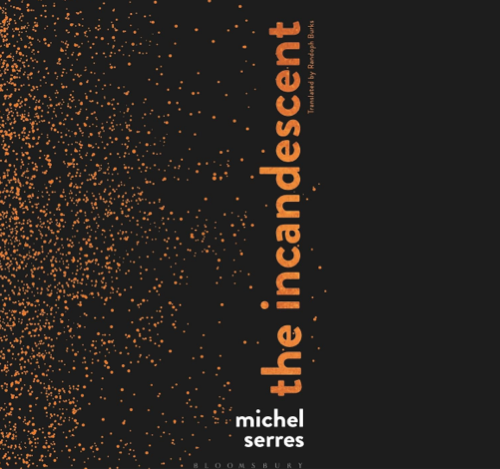
Modern technology does more than accelerate life—it reshapes how time itself is experienced. Drawing on Michel Serres’ reflections in The Incandescent, this essay explores how intention, speed, and exo-Darwinism compress the past into background, turning history into a resource rather than a place we still inhabit.
A Crisis of Purpose: Panurgy in Michel Serres’ L’Incandescent
Michel Serres names our moment a crisis of purpose rather than meaning. In L’Incandescent, he calls it panurgy: the human power to act at the scale of the world itself. As computation accelerates and intelligence becomes a wager, fate gives way to responsibility—and purpose outruns its bearings.
Energy and Epiphany in the Later Works of Michel Serres
A brief reflection on Michel Serres’ understanding of our ongoing power to expand our understanding and harnessing of energy to overcome fate and destiny. He re-reads the experience of religion in this context.
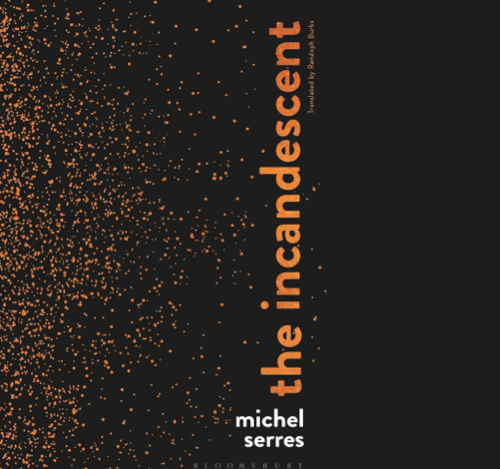
Reading The Incandescent: Human Scale and Accursed Shares
This essay reads Michel Serres’s The Incandescent as an argument that modern ethics must be extended, not replaced, to meet the speed and scale of global, computational human activity. Drawing on accursed shares, Pan, and traditions of impulse control from Stoicism and Christianity, it shows how moral life today depends on individual refusals of violence that dissipate harm locally even as consequences propagate globally.
Inventing Behavior After the Neolithic: Michel Serres and the Moral Problem of Auto-Evolution
This essay introduces Michel Serres’ late philosophy by emphasizing its moral core rather than its metaphysics. Drawing on The Incandescent and le Grand Récit, it explores auto-evolution, violence, and the challenge of inventing moral orientation after the Neolithic age.
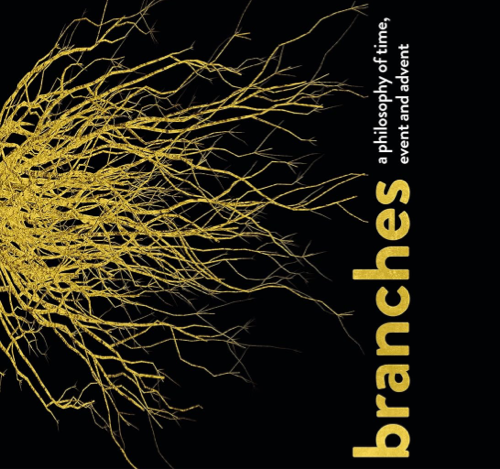
Fate, Computation and the End of Christian Time
This brief essay traces how Enlightenment calculation reshaped humanity’s experience of time, fate, and foresight—from biblical chronology to geological deep time and modern predictive control. Rather than condemning the Enlightenment, it argues for renewing its legacy by learning how to live responsibly within the futures we now help to compute.
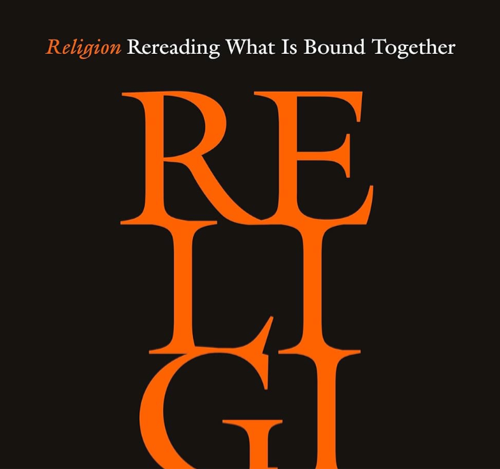
Michel Serres: The Synthetic Experience of Religion
This essay offers an accessible introduction to Michel Serres’s philosophy through his final book Religion. It explains how concepts like clinamen, emptiness, and navigation help us understand responsibility, violence, and meaning in modern life.

The Natural Contract - Michel Serres
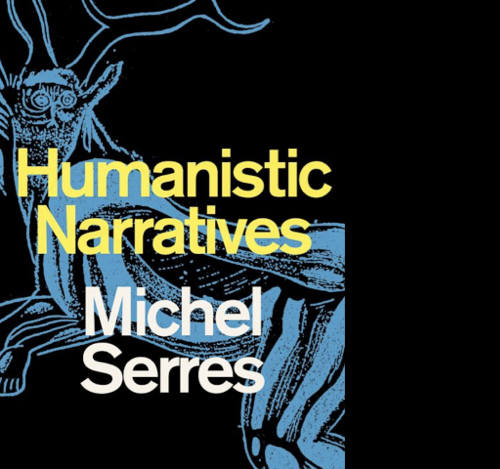
Michel Serres at his most political. This 1990 book is a defining work in the modern understanding of the climate crisis. I've written a long essay inspired by the depth and breadth of Serres vision.

The Parasite - Michel Serres
An essay on how to use 'the parasite' as an operational concept that expands our capacity for experience.

At the Edge of le Grand Récit
An essay exploring Michel Serres’s engagement with Le Grand Récit and what narrative uncertainty means for ethical life in a world of multiplicity and contingent connection.
L’Incandescent – Serres on Emergence, Light, and Moral Attention
An essay exploring Michel Serres’s concept of the incandescent — where light, unpredictability, and moral attention emerge at thresholds beyond calculation and control.

Birth of Physics - Michel Serres
Michel Serres makes Lucretius our contemporary. Published just before Le Parasite, Le Naissance de la physique was a key moment in the history of chaos theory and the ability to see order emerging from disorder -- a reversal of the Enlightenment's formula. Serres finds in Lucretius' De rerum natura a pre-Modern text that offers a more relevant way of thinking about order and disorder free of eternal natural laws.