

Featured Essays


Key Themes
History of Intelligence
AI sets in motion a new chapter in the history of intelligence’s confrontation with fate and necessity. Telling the stories of its twists and turns will broaden our upstanding of what intelligence has been and can be.
Computational Power
These essays examine how digital systems reshape experience, agency, and the unfolding of time. This is not a moral complaint; it is an examination of possibilities.
Rejuvenation
Modernity is not defined by the loss of meaning, but by the expansion of human self-assertion—the long effort of our genus to shape contingency, redirect fate, and assume responsibility for outcomes once attributed to nature or the gods.

Creative Evolution
What is intelligence? Not simply accuracy. Not merely survival. Intelligence is the adaptable and expansive capacity to make the future less like fate and more like an open field of possibility.
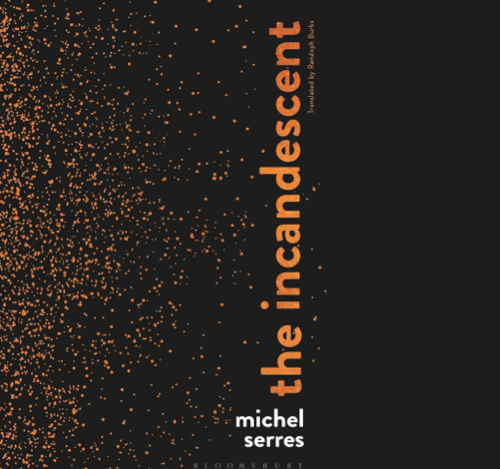
Reading The Incandescent: Human Scale and Accursed Shares
This essay reads Michel Serres’s The Incandescent as an argument that modern ethics must be extended, not replaced, to meet the speed and scale of global, computational human activity. Drawing on accursed shares, Pan, and traditions of impulse control from Stoicism and Christianity, it shows how moral life today depends on individual refusals of violence that dissipate harm locally even as consequences propagate globally.
Fate, Computation and the End of Christian Time
This brief essay traces how Enlightenment calculation reshaped humanity’s experience of time, fate, and foresight—from biblical chronology to geological deep time and modern predictive control. Rather than condemning the Enlightenment, it argues for renewing its legacy by learning how to live responsibly within the futures we now help to compute.
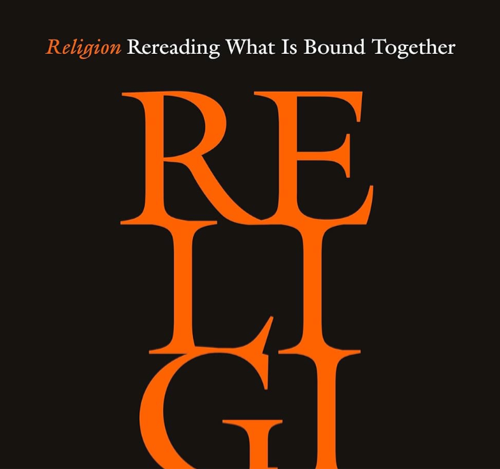
Michel Serres: The Synthetic Experience of Religion
This essay offers an accessible introduction to Michel Serres’s philosophy through his final book Religion. It explains how concepts like clinamen, emptiness, and navigation help us understand responsibility, violence, and meaning in modern life.

Saving the Phenomenon: Panchrone, Assembly Theory and Thinking in Time
A brief exploration of how theoretical physicists such as Lee Smolin and Sara Imari Walker are not only rethinking time but changing our capacity for experience.
Juvenescence - Robert Pogue Harrison
An essay on the experience of heterochronic time in our turbulent age. Harrison offers his characteristically unique take on heterchronic time and humanity’s ability to remain youthful while we age.
The Discovery of Time - Stephen Toulmin and June Goodfield
Humans are not automatically born with a consciousness of how long the Earth has been around. The Discovery of Time traces the story of how Enlightenment geologists undid the long-standing consensus that the events of Genesis occurred around 4000 BCE. This is perhaps the Enlightenment's greatest legacy.
Myth and Thought among the Greeks - Jean-Pierre Vernant
An exceptionally detailed and compelling investigation into the evolution of Greek philosophical thought out of myth.

Powers of Time - David Lapoujade
One of the best explanations of Bergson’s thought. Lapoujade connects duration with motion and in the process exposes why Bergson’s thought is more than conceptual philosophy. It is the transformation of how we experience ourselves and the world.

The Radical Philosophy of Saint Paul - Stanislas Breton
Breton set in motion the philosophical and theological reconsideration of Paul (which was already underway in more scholarly investigations into ‘the historical Paul’). This book is crucial to the reconsideration of Paul that found in his letters the power to suspend the weight of culture to find ‘new horizons’ of salvational experience.

The Natural Contract - Michel Serres
Michel Serres at his most political. This 1990 book is a defining work in the modern understanding of the climate crisis. I've written a long essay inspired by the depth and breadth of Serres vision.

The Parasite - Michel Serres
An essay on how to use 'the parasite' as an operational concept that expands our capacity for experience.
Hans Ulrich Gumbrecht - Our Broad Present
Gumbrecht speculates on what the present has become now that grand narratives of progress are no longer credible.

Peter Galison - Einstein’s Clocks, Poincaré’s Maps
The twentieth century's need for national and global time was a problem of electromagnetism. It became an abstraction (as relativity) out of these practical and commercial concerns.

Dava Sobel - Longitude
Understanding Harrison's clocks is essential to understanding how we got from the Middle Ages to the Enlightenment and our own Modern age. The story of John Harrison's attempts to solve the Longitude Problem is a story about the changing historical consciousness of time.

Heidegger - Being and Time
With deference to Bergson, Heidegger's Being and Time is the lasting work with respect to philosophical thinking about time.

Time Reborn - Lee Smolin
Lee Smolin argues that physics should no longer treats time as an experiential illusion. It is fundamental to the universe because everything is relational and evolving.
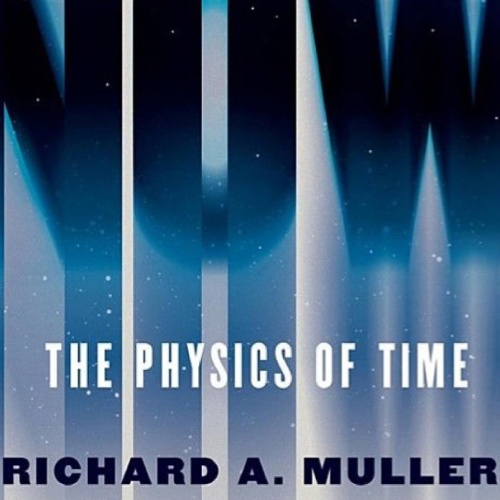
NOW: The Physics of Time - Richard A. Muller
Richard Muller argues that if space is expanding (the Hubble Expansion), then time must also be expanding. The universe lives on a "leading edge of time" that is the continuously rolling now.

Birth of Physics - Michel Serres
Michel Serres makes Lucretius our contemporary. Published just before Le Parasite, Le Naissance de la physique was a key moment in the history of chaos theory and the ability to see order emerging from disorder -- a reversal of the Enlightenment's formula. Serres finds in Lucretius' De rerum natura a pre-Modern text that offers a more relevant way of thinking about order and disorder free of eternal natural laws.

Jesus and Pilate - Giorgio Agamben
The trial of Jesus was not a trial but a “handing over” as a form of giving up in the face of the “crossing of the temporal and the eternal that assumed the form of a trial.”